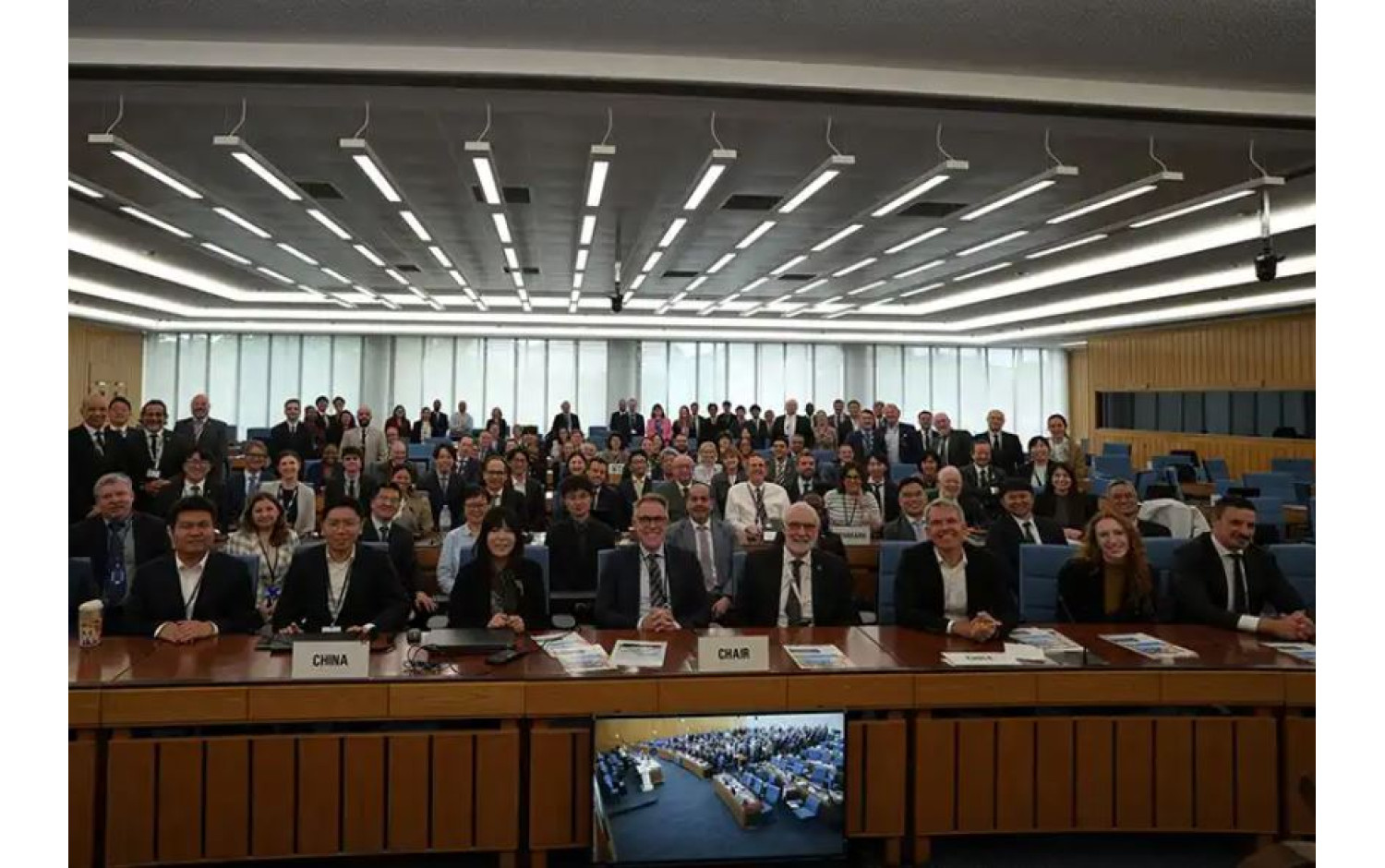
The International Maritime Organization (IMO) has adopted a new International Safety Code for Autonomous Maritime Surface Ships (MASS Code), which will enter into force on 1 July on a voluntary basis, and has set a timetable for it to become mandatory on 1 January 2032, with several intermediate steps.
The IMO is thus supporting the safe integration of commercial ships equipped with artificial intelligence and remotely controlled vessels into global maritime transport. This is because the MASS Code establishes a comprehensive, objective-based framework to ensure that autonomous or remotely controlled ships are designed and operated with a level of safety and environmental protection equivalent to that expected of a conventional ship.
Autonomous ships, with little or no crew, must also comply with the International Convention for the Safety of Life at Sea (SOLAS). As this is a non-mandatory instrument, it gives Member States the opportunity to test its use whilst paving the way for it to become mandatory under this Convention.
Arsenio Domínguez, Secretary-General of the IMO, considers this to be “a historic achievement” that places the organisation at the forefront of regulating emerging technologies. He believes it is “a major step forward, enabling innovation whilst ensuring that safety, accountability and the human element remain at the heart of maritime operations”. This text demonstrates the IMO’s ability to “shape” the future of maritime transport.
What are the timelines?
The new MASS Code complements existing IMO instruments, taking into account international law, including the United Nations Convention on the Law of the Sea (UNCLOS). It is the culmination of nearly a decade of multilateral discussions, legal work and sea trials, to enable new and conventional technologies to operate safely alongside one another.
The roadmap sets out that the MASS Working Group will meet in December of this year to develop a framework for a pilot phase of the non-mandatory MASS Code. By 2028, the development of the mandatory MASS Code will be established, based on the non-mandatory Code and the results of the previous phase, as well as the review carried out by the subcommittees.
Once the amendments to the SOLAS Convention have been considered, it is anticipated that the IMO will adopt its first mandatory MASS Code by 1 July 2030, to come into force on 1 January 2032.
Constant human supervision
As set out in the MASS Code, a ship is considered autonomous if the on-board technology is designed and verified to control actions without human intervention. Although the number of unmanned or remotely operated ships is currently limited, an increasing number are being successfully tested internationally.
The MASS Code introduces new requirements for the design, certification and operation of these vessels, including in key areas such as navigation, connectivity, remote operations, fire safety and search and rescue.
It also places particular emphasis on risk assessment, robust system design, cybersecurity and the integration of Remote Operations Centres (ROCs). However, the most important point is that it highlights the importance of human oversight, whereby the captain retains overall responsibility for the vessel at all times, even when not on board.
News and image obtained: "Diario El Canal"